
Are you coping, surviving — or actually thriving?
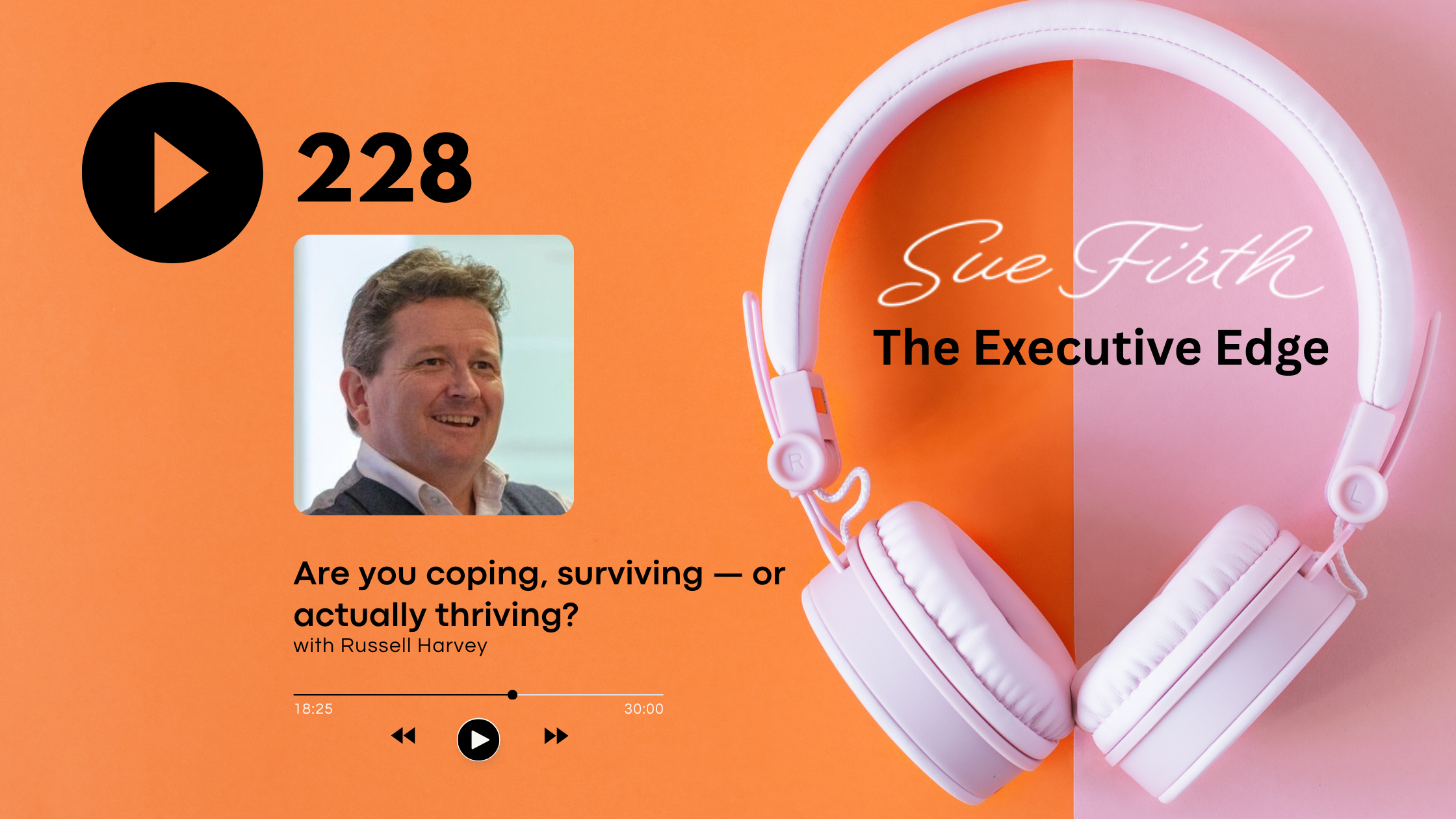
In episode 228, I talked with resilience coach Russell Harvey, who has spent over a decade helping leaders build the kind of resilience that lasts.
The World Economic Forum has flagged resilience as one of the most critical skills for 2030, so it was fabulous to talk to someone specialising in this area.
Russell’s background spans the NHS, BT, and years of leadership development work — and he brings a refreshingly practical lens to a word that can feel overused: resilience.
What We Covered
VUCA — and its antidote We unpacked VUCA (Volatile, Uncertain, Complex, Ambiguous) — the environment most of us are operating in right now. Russell introduced me to VUCA Prime: Vision, Understanding, Clarity, and Agility. The counterbalance we all need.
The Resilience Wheel
Russell’s signature framework covers seven interconnected dimensions:
Attitude — your overall outlook on life
Purpose — resilient people have one
Confidence — your belief, in any given moment, that you can
Adaptability — staying flexible as the world shifts
Support Network — who’s in your corner
Meaning — the stories you tell yourself about events
Energy — playing to your strengths (linked to the StrengthScope psychometric)
“Spring forward, not bounce back” Russell reframes resilience brilliantly: it’s not about returning to how things were — it’s about springing forward with learning. That one landed with me.
Command vs. Control A shift in language: Russell works with leaders to move from trying to control their environment to being in command of it. A subtle but powerful distinction — especially for the control freaks among us (you know who you are!).
The three states Russell described the spectrum he watches for in clients — surviving (hanging on by your fingernails), coping (”I’m okay… but”), and thriving (”There’s a lot going on — and I’m good”). Which one are you?
Actionable Takeaways from the show
Self-assess your Resilience Wheel today. Score yourself out of 10 on each of the seven dimensions. Where are you strong? Where could you shore things up before you need to rely on it?
Notice your language. How do you answer “How are you?” Your words reveal more than you think.
Don’t wait until you’re drowning. Proactive resilience building is far more effective than crisis management.
Ditch “bounce back.” Ask instead: What did I learn? What do I do differently now?
Connect with Russell
Or as Russell himself says, search “Russell the Resilience Coach” on any social media platform and you’ll find him there!
