
The Gap Between Good and Great Isn't Technical
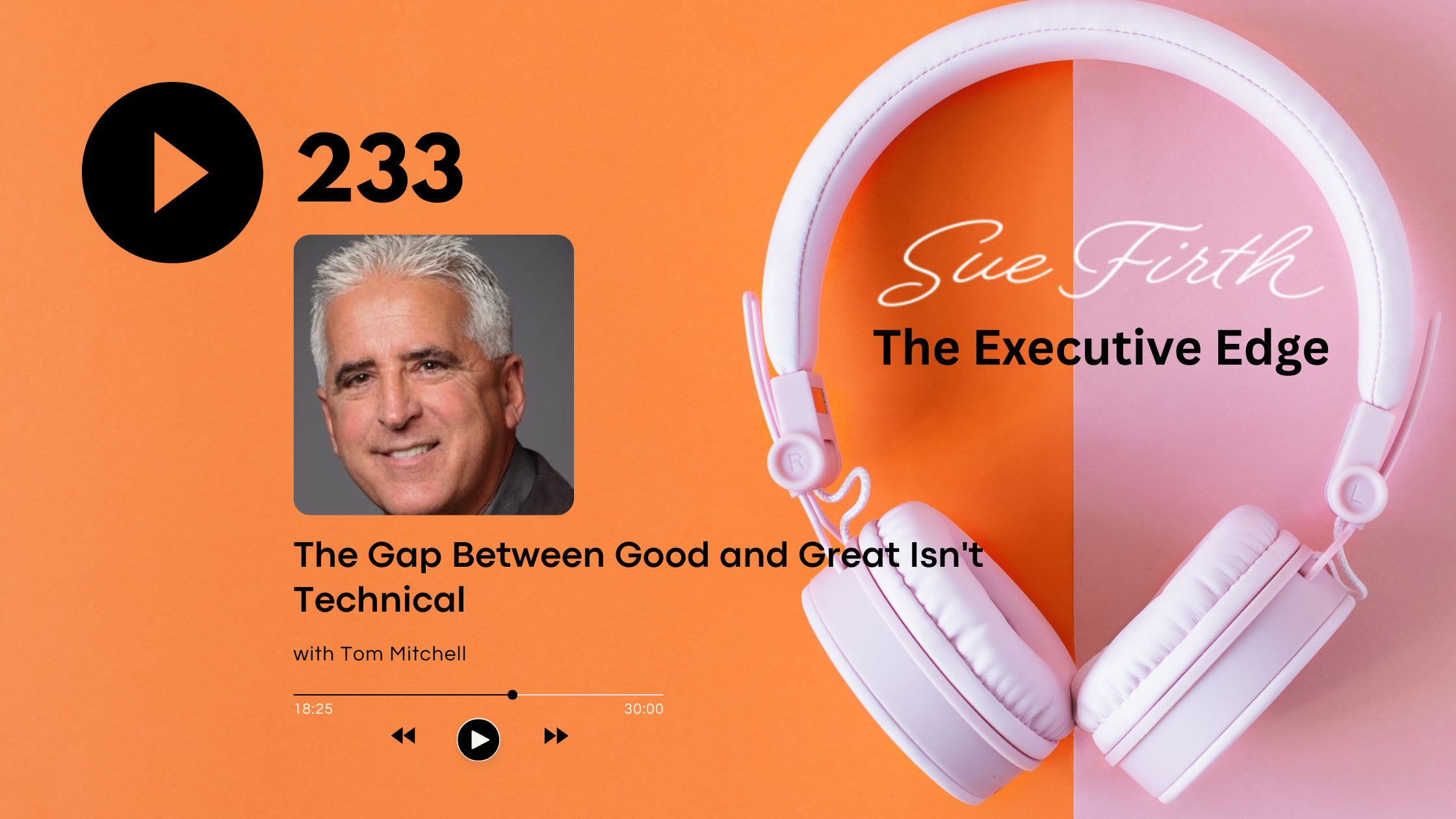
In Episode 233 of The Executive Edge, I talk with Tom Mitchell — sports psychologist, executive coach, and author of Embrace Your Inner Coach. Tom spent 14 years as the sports psychologist for the Golden State Warriors in the NBA, co-authored an Amazon bestseller with NFL legend Joe Montana, and has spent over four decades helping elite athletes and senior executives unlock what he calls "the inner game". His message? The gap between good and great — in sport or business — is rarely technical. It’s psychological.
What this episode covers
The inner game is the real game
Tom’s journey into sports psychology began in the 1970s, when the field barely existed. What drew him in was the question behind the question: why do gifted athletes — and leaders — underperform? It’s rarely about technical skill. It’s self-talk, setbacks, relationships, identity. The same psychological levers that govern performance on a basketball court operate just as powerfully in a boardroom.
Why the college athlete taught Tom more than the pro
Fourteen years with the Golden State Warriors was extraordinary — but Tom reflects that his most meaningful work was often with college athletes who hadn’t yet ‘arrived’. They were still in pursuit. Sound familiar? That’s most of your organisation, right now.
From sport to business: the principles that cross over
Tom identifies three pillars that elite athletes share — and that executives either have or need to develop:
Clarity — knowing where you’re going and what you’re building towards. Many high-performers have been promoted into roles they haven’t fully interrogated.
The burn — the drive, desire, ambition. In sport it’s visible and loud. In business it often needs coaxing out. Great coaching creates the conditions for people to name it.
Visualisation — not the eyes-closed, incense-burning kind. Joe Montana didn’t ‘meditate’, but he colour-coded his play routes and ran them vividly in his mind’s eye. That counts. Tom helps executives do the same — seeing, feeling, and inhabiting their goals as if they’ve already happened.
The playing time problem — and what coaches can and can’t fix
One of the most honest moments in this conversation: Tom talks about knowing the limits of his role. When a player felt sidelined or undervalued, he could listen, reflect, and help them improve. What he couldn’t — and shouldn’t — do was lobby the coach for their minutes. There’s a lesson here for every leader who thinks coaching is the same as solving.
The magic wand exercise — and why it works
Not everyone can visualise. Some people can’t close their eyes and picture a goal. Tom’s workaround: ask them to pretend they have a magic wand. What’s the dream come true? Let them verbalise it — and watch the brain pathways open up. It’s a beautifully simple tool that translates directly into executive coaching.
Journaling as a leadership practice
Tom has kept journals for over 40 years. He puts it simply: journaling is taking a photograph of yourself. Not every day, not on a strict schedule — just occasionally capturing what you’re thinking, feeling, dreaming, struggling with. For executives especially, this kind of reflective practice is often the missing link between doing and growing.
The invisible treasure
Tom’s book — and his philosophy at this stage of his career — is less about frameworks and more about helping people access what’s already within them. No podcast, no book, no workshop gives you the answers. The best ones lead you towards your own. That’s what Tom calls the invisible treasure.
Key takeaways
The psychological challenges of elite athletes and senior executives are far more similar than most people realise.
Clarity, drive, and visualisation are the three pillars that distinguish high performers — in any field.
Coaching isn’t fixing. Knowing when to listen and when to step back is a skill in itself.
Visualisation doesn’t require meditation — it just requires imagining your goal as if it’s already real.
Journaling is one of the most underrated leadership tools available. Start irregular. Start small.
The most powerful growth happens when someone learns to access their own inner coach — not rely on an external one.
Embrace Your Inner Coach
Tom’s new book draws on decades of stories — from Sugar Ray Leonard and the Grateful Dead to Google executives and a real estate agent finding her feet. It’s part memoir, part manual, and all heart. Available now on Amazon.
Connect with Tom
Website: www.tommitchell.com
For corporate coaching enquiries or speaking, reach out via Tom’s website.
