
Better, Not Perfect
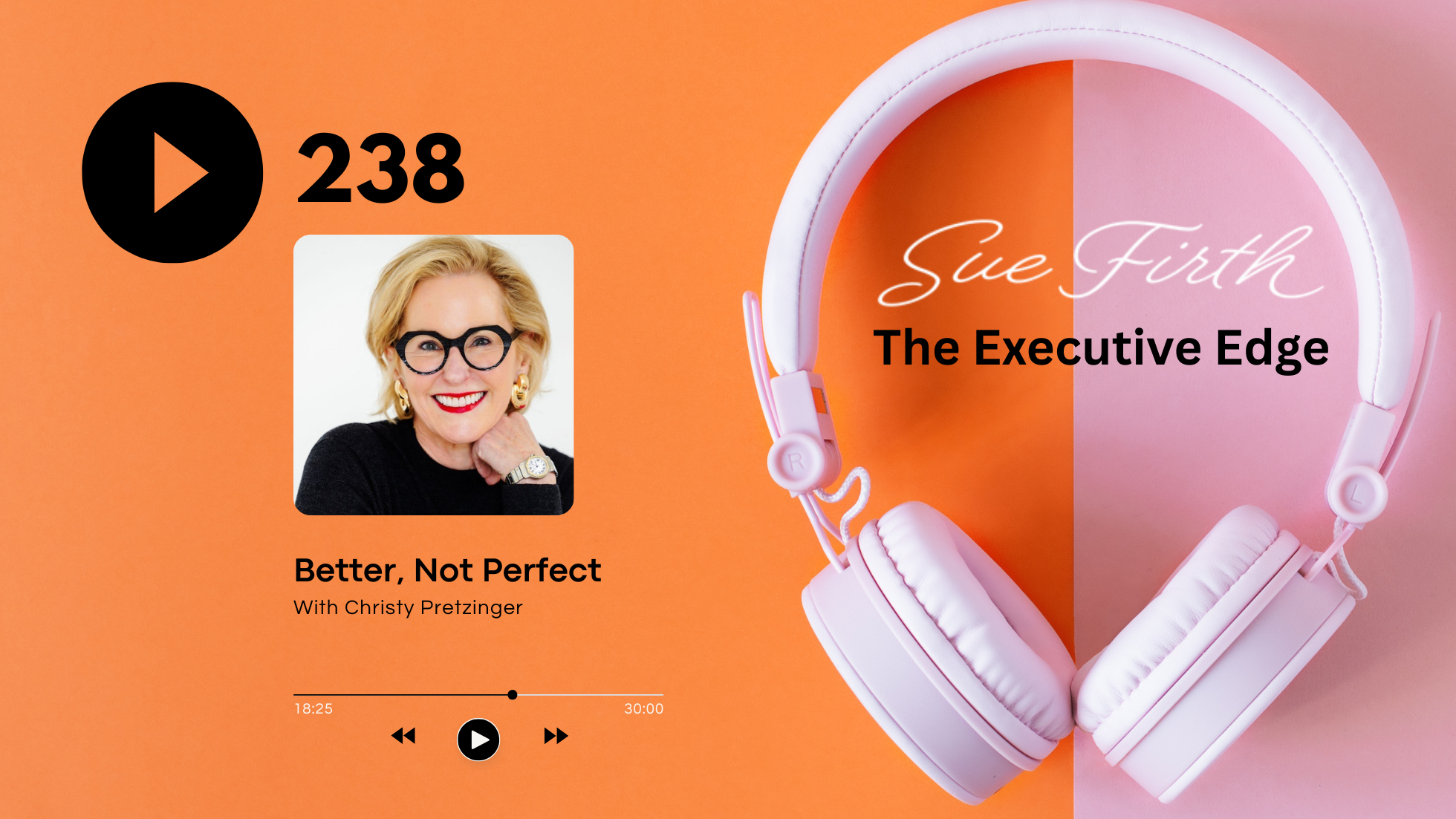
This week on Episode 238 of The Executive Edge, I talk to Christy Pretzinger, founder of The Better Leader Project, CEO of healthcare content agency WG Content, and author of Your Cultural Balance Sheet.
Christy has built her business around an idea that rarely appears in a strategy document but shapes everything she does: kindness.
Together, we explore why so many younger employees arrive at work technically capable but lacking the interpersonal skills employers quietly assume they already possess. We discuss why this isn’t a character flaw or a generational weakness—it’s a gap in how we’ve prepared people for work.
With AI transforming the workplace, Christy argues that the qualities that will set us apart are the ones we’ve spent years calling “soft skills”: empathy, curiosity, vulnerability and the ability to genuinely listen.
What you’ll learn
Why empathy, curiosity and listening are actually hard skills that determine career success.
How perfectionism often becomes a strategy for managing shame—and why “better” is a healthier goal than “perfect”.
Why vulnerability has to be practised in safe environments before people can bring it into the workplace.
How leaders can correct mistakes without damaging confidence.
Why sharing experience is often more powerful than giving advice.
How kindness and accountability can exist side by side.
The skills nobody teaches
One of the ideas that really resonated with me is that employers expect young people to arrive at work already equipped with resilience, emotional intelligence and confidence.
The reality is very different.
As I share in our conversation, I saw this with my own two children, now 24 and 28. They learnt how to work hard, meet deadlines and do all the “right” things, but what caught them out was everything else—receiving difficult feedback, navigating uncertainty and working out what they wanted rather than simply meeting other people’s expectations.
Businesses inherit this gap. If nobody helps people bridge it, they often conclude that they are the problem.
Christy makes the point that empathy, vulnerability, curiosity and listening aren’t “soft” skills at all. They’re the hardest skills to master—and increasingly they’re the ones that distinguish us from AI.
Better, not perfect
One of Christy’s signature talks is called Better, Not Perfect.
She describes perfectionism as a form of shame management. The thinking goes something like this:
“If I can just be perfect, then I’ll never have to feel ashamed.”
The problem is that perfection is unattainable. No matter how hard we chase it, it always stays just beyond reach.
“Better”, however, is measurable. It simply means becoming a little wiser, a little kinder and a little more capable than yesterday.
Christy calls this your Better Quotient (BQ)—a mindset that grows through practice rather than perfection.
Creating psychological safety
One of the strongest themes in our conversation is vulnerability.
Christy believes younger employees cannot be expected to be open and honest if their managers never model vulnerability themselves.
I couldn’t agree more.
When leaders admit mistakes, acknowledge uncertainty and demonstrate that learning is valued more than appearing flawless, they create psychological safety.
Without that safety, everyone keeps their armour on—and the conversations that really matter never happen.
These skills cannot simply be read about.
They have to be practised somewhere people feel accepted before they can confidently bring them into the workplace.
Experience beats advice
Another idea I particularly liked was Christy’s approach to performance conversations.
Rather than relying on annual reviews that rank people and focus on shortcomings, she encourages leaders to share experience instead of dispensing advice.
Instead of saying:
“Here’s what you should have done.”
Try saying:
“When I was in a similar situation, this is what happened to me, and here’s what I learned.”
It preserves dignity, encourages learning and makes difficult conversations far more productive.
Kindness isn’t weakness
One thing Christy is very clear about is that kindness doesn’t mean lowering standards.
It means creating an environment where people are allowed to make mistakes, learn from them and improve without being humiliated.
That still requires boundaries, honest feedback and accountability.
The difference is that correction comes with clarity and respect rather than blame.
As Christy says, leaders should let people stumble where the consequences are survivable, help them recover quickly and use mistakes as opportunities to grow.
This week’s takeaway
For me, the biggest message from this conversation is that the challenges many employers see in younger generations aren’t simply a matter of attitude.
They’re the result of a training gap.
The leaders who will thrive are those who stop assuming people already possess the skills they need and start teaching them.
In a world increasingly shaped by AI, our greatest competitive advantage isn’t technology—it’s our humanity.
And perhaps the simplest leadership lesson of all is this:
Stop making assumptions about what people need. Ask them.
